TLDR
- General-purpose platforms and healthcare-specific ones get evaluated on different criteria, and most organizations underestimate that gap.
- The Joint Commission and CMS expect annual policy reviews and updates whenever a regulation changes. Manual systems can’t sustain that pace.*
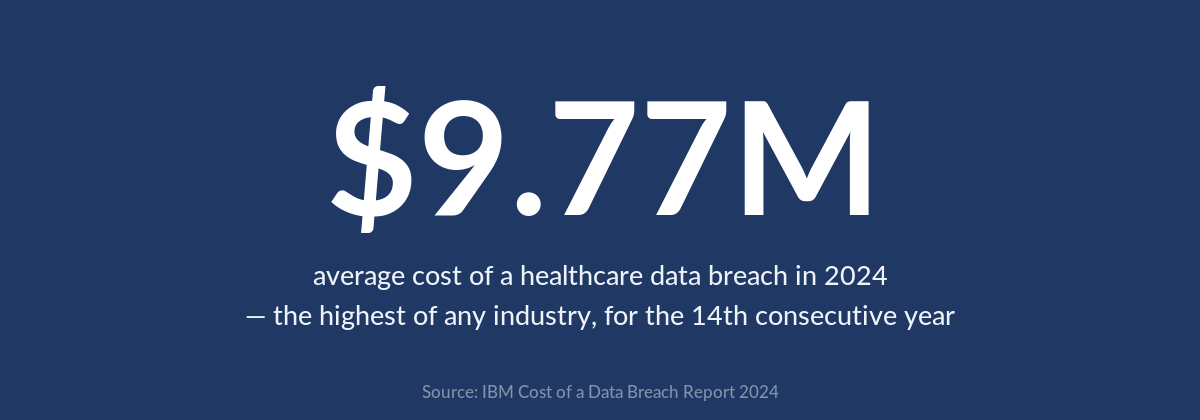
- Healthcare has been the most expensive industry for data breaches for 14 straight years, averaging $9.77 million per breach in 2024.**
- Five capabilities separate adequate software from real healthcare governance: centralized access, automated workflows, audit readiness, attestation tracking and real-time analytics.
- Ntracts Policy Manager is purpose-built for healthcare governance, with automation aligned to accreditation standards and expert support from go-live through continuous compliance.
Every healthcare organization is managing more policies than ever. As regulations shift and documentation needs expand across departments, teams spend hours searching for the right version of the right document, and that’s before accounting for the review cycles, approval chains and attestation records that accrediting bodies expect to see.
The case for automation is clear. What is harder to assess is whether a given platform is actually built for healthcare or whether it’s a generic document management tool with a compliance-themed marketing page.
This guide, drawn from our Policy Management Evaluation Toolkit, outlines what to evaluate, what questions to ask and what separates a purpose-built healthcare solution from one that will require constant workarounds.
Why most policy management evaluations go wrong.
The typical evaluation process starts with a feature comparison. Does it have version control? Can it send notifications? Does it have a dashboard?
These are reasonable questions, but they do not reveal the gap that matters most: whether the platform was designed around how healthcare governance works.
Regulatory and accreditation bodies including The Joint Commission and CMS expect policies to be reviewed annually and updated whenever a regulation changes.* In a healthcare organization managing hundreds of active policies across multiple departments, that’s a continuous operational requirement, not a periodic project, and general-purpose platforms are not built to sustain it.
The right evaluation framework starts with healthcare-specific requirements and works backward to features, not the other way around.
Healthcare has been the most expensive industry for data breaches for the 14th consecutive year. In 2024, the average healthcare breach cost $9.77 million**, a figure that reflects what is at stake when compliance infrastructure fails to keep pace with risk.
Policy management is a meaningful part of that infrastructure. Organizations that cannot demonstrate current, staff-acknowledged policies are more exposed, both during surveys and when adverse events occur.
The five capabilities that define effective healthcare policy management software.
When comparing vendors, each of the following areas maps to a real-world compliance need. A solution that handles document storage but falls short in any of these areas will create gaps.
1. Centralized access and version control.
An effective solution provides a single, searchable repository with clear document ownership and complete audit trails. This eliminates the policy silos that develop between nursing, HR, compliance and clinical departments, and ensures staff always access the current approved version, not a printout from last year or a file saved to a shared drive.
The question to ask is not "does the system store documents?" but "can every staff member in every department always find the current approved version without calling anyone?"
2. Automated workflows and review cycles.
Configurable approval workflows should align with your organization’s actual hierarchy and regulatory requirements, not a generic approval chain. The system should automatically alert reviewers and approvers before deadlines are missed, so review cycles stay on schedule without a coordinator manually tracking every expiration date.
For healthcare specifically, workflows need to accommodate the approval chains that clinical governance uses: nursing leadership, compliance, quality, HR and safety, each with defined roles and documented signoffs.
3. Audit and survey readiness.
During a survey, organizations need to produce documentation immediately, not compile it over the course of a week. An effective solution provides instant reporting on policy approval dates, review history and staff acknowledgment rates, giving surveyors what they need and giving your team the confidence that comes from continuous readiness rather than pre-survey scrambling.
4. Training and attestation tracking.
A policy that has not been acknowledged by the staff responsible for following it does not reduce risk. Look for built-in attestation tracking or native integration with a learning management system, so that when a policy is updated, the system confirms that the right people have read and understood the change. This is especially important for policies tied to infection control, medication administration, patient safety and HR compliance.
5. Real-time analytics and dashboards.
Compliance leaders need visibility into overdue policies, gaps in department attestations and upcoming review cycles before those gaps become findings. Real-time reporting surfaces risk early enough to act on it. If your current or prospective solution only tells you what has already gone wrong, it’s reactive, not a governance tool.
What to ask about implementation and support.
Features matter, but so does what happens after you sign the contract. In healthcare, implementation is not a technical rollout. It’s a change management process that directly affects compliance outcomes.
Before committing to a vendor, ask the following five questions:
1. How do you ensure policy mapping aligns with Joint Commission or CMS requirements?
A vendor that cannot answer this specifically is likely offering generic configuration support, not healthcare expertise.
2. Can you migrate legacy policies while preserving approval and revision history?
Organizations switching from existing systems need their historical record intact, particularly for audit and litigation defense purposes.
3. How do you train department leaders who are accountable for policy compliance but are not technical users?
Adoption among clinical and administrative leaders determines whether the system gets used.
4. What support do you provide when we are preparing for or undergoing an accreditation or state survey?
A strong vendor has healthcare compliance expertise available when it matters most, not just during initial setup.
5. What does post-implementation support include?
Look for guided onboarding led by healthcare compliance experts, custom templates built around your existing approval processes, continuous education and policy optimization after go-live, dedicated support teams familiar with healthcare audits and standards and train-the-trainer programs that build internal champions.
How Ntracts Policy Manager addresses each area.
Ntracts Policy Manager is purpose-built for healthcare policy lifecycle management, designed around accreditation standards, regulatory frameworks and the operational realities of clinical environments.
It provides healthcare-specific automation tailored to accreditation, licensure and regulatory requirements.
- Its centralized, searchable policy library enforces automatic version control with cross-department visibility, so every staff member is always working from the current approved document.
- Automated workflows mirror real healthcare approval chains, including nursing, compliance, HR, safety and quality.
- Built-in attestation tracking records who has read and acknowledged each policy, creating the audit proof accrediting bodies expect.
- Survey-ready reporting provides one-click access to review dates, approvers and staff compliance rates.
And expert implementation and support comes from specialists who understand healthcare operations, not just software configuration.
For organizations building or modernizing their policy content, Ntracts Policy and Procedure Library provides access to 15,000+ professionally developed, customizable templates written to current regulatory and accreditation standards across 80+ clinical and operational manuals. Ntracts Regulatory Notifications monitors federal agencies and accrediting organizations including CDC, CMS, FDA, OSHA and TJC, and delivers validated updates directly to your team, so policy reviews are triggered before standards fall out of alignment.
As your organization grows, Ntracts scales with it, adapting as regulations evolve and helping you stay compliant today and ready for whatever comes next.

The question worth asking before you evaluate anything else.
Do your current systems help you stay survey ready and aligned, or are you managing compliance reactively?
If the honest answer is reactive, the issue is usually not effort. It’s infrastructure. The right policy management solution does not just store documents. It maintains readiness across every department, every review cycle and every regulatory change.
Sources
*The Joint Commission: Hospital Accreditation Standards (annual review guidance); Centers for Medicare and Medicaid Services (CMS) State Operations Manual.
**IBM: Cost of a Data Breach Report 2024.
.png?width=807&height=520&name=policy-brochure2%20(1).png)