
-
TLDR
- Payments often keep going out after a contract expires, usually at old rates and with no one re-approving them.
- In healthcare that's a governance issue before it's a finance one, because the obligations and protections in the contract end when the term does.
- Physician arrangements carry the most risk, since Stark and AKS expect a current, signed agreement at fair market value.
- The fix starts with matching every recurring payment to a current contract and making end dates visible well before they pass.
Budget season tends to send finance teams looking for savings in the usual places, like headcount, supplies and travel. One place that rarely gets a second look is the set of contracts that have already ended but are still being paid.
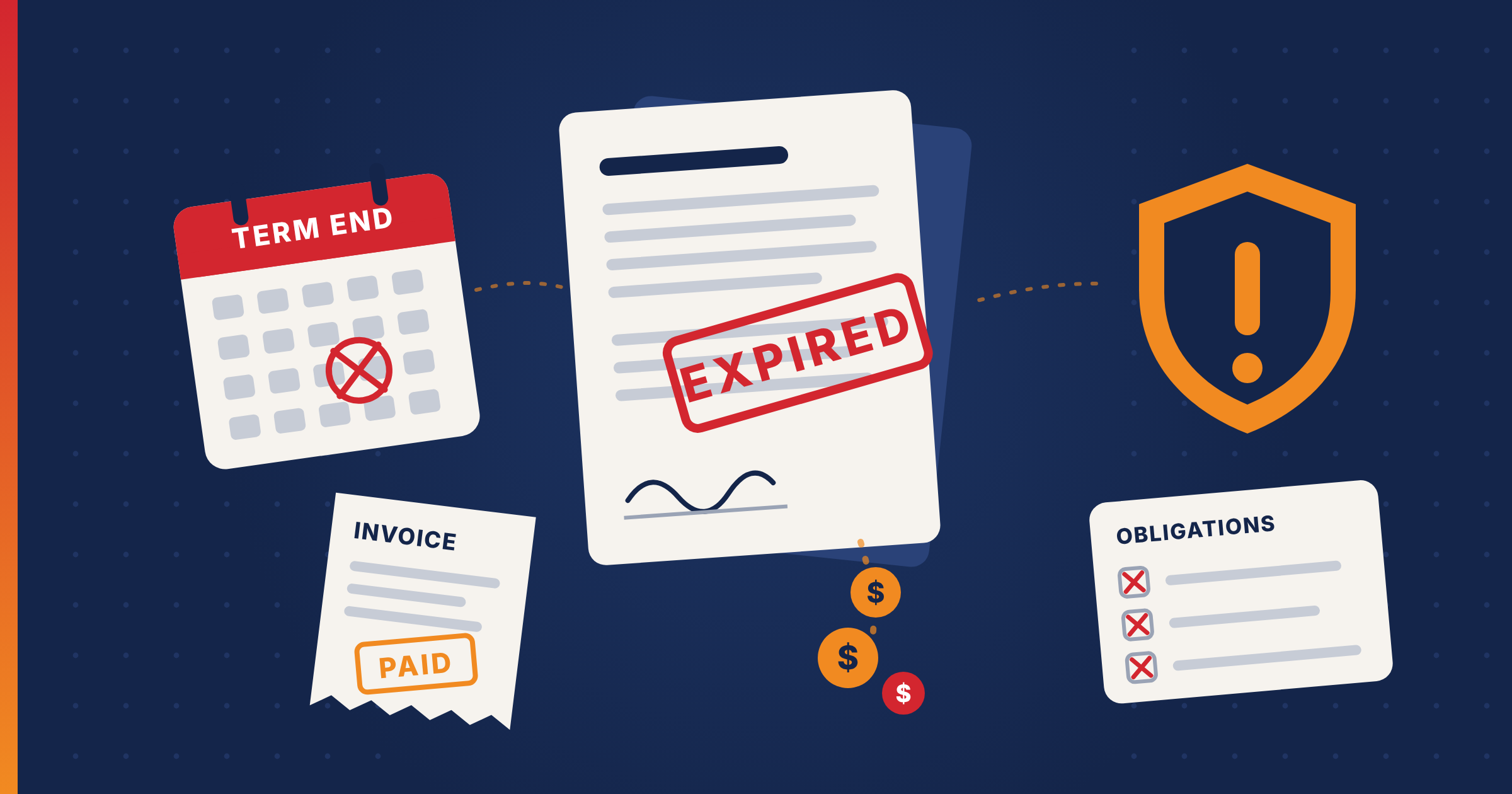
When an agreement expires, the invoices often keep coming, and accounts payable keeps paying them at the old rate for services no one has re-approved. In most industries that would simply be wasted money. In healthcare it can also be a compliance gap that sits quietly in the AP queue until an auditor finds it.
This post takes a closer look at that one leak: how it happens, why it matters more in healthcare and what you can do to close it.
How an expired contract keeps getting paid.
No one sets out to pay on an expired contract. It usually happens because the contract and the payment were never connected to begin with.
A vendor or physician agreement gets signed, and someone in AP sets up the recurring payment. Two or three years later the term runs out, but nothing in the payment setup knows that, so the invoices keep arriving and keep getting approved.
A few common gaps make this more likely:
- No one owns the end date. The person who signed the agreement may have changed roles or left, and the renewal reminder went with them.
- Renewal terms are unclear. Some contracts renew automatically and many don't, and AP usually can't tell which is which without the document in hand.
- The vendor has little reason to raise it. As long as payments arrive, nothing prompts them to revisit the agreement.
- Old rates stay in place. The original price keeps getting billed even if market rates have dropped or the scope of work has changed.
One expired agreement on its own may not look like much, but across hundreds of vendors and providers the total can be significant.
In healthcare, it's a governance problem first.

In most industries an expired contract is treated as a finance issue: you find the overpayment, recover what you can and move on. Healthcare organizations have more to think about.A contract sets more than a price. It also carries the obligations both sides agreed to, such as duties, time logs, performance standards, insurance requirements, termination rights and, for many vendors, a business associate agreement. When the term ends, those obligations end with it, even if the payments continue. You may be paying for services without a written agreement in place and without the protections you negotiated.
This matters most with physician arrangements. Stark Law and the Anti-Kickback Statute generally expect a signed, current agreement with compensation set at fair market value. If a physician keeps getting paid after the agreement expires, the arrangement may no longer fit within a Stark exception or AKS safe harbor. Stark does allow some limited room for holdover arrangements, but those provisions come with conditions, and relying on them by accident is a risky place to be.
Vendor contracts carry their own exposure. If a BAA has lapsed, the HIPAA terms that govern that vendor's access to PHI may have lapsed with it. Whether an internal auditor or the OIG is asking, the question tends to be the same: who approved this payment, and under what agreement?
So the question to ask isn't only how much was overpaid, but what the organization was exposed to while those payments were going out.
What it looks like in practice.

These situations come up in most health systems, and they rarely draw attention on their own.
- A medical director stipend that keeps getting paid every month, even though the agreement ended last spring and no one has collected time logs since.
- A service contract on retired equipment, where the device is long gone but the quarterly maintenance invoice still shows up.
- A staffing vendor that kept billing at the rate set three years ago after the contract lapsed, with no one checking it against current terms.
- A software subscription that auto-renewed once as the contract allowed and has now run two more terms without a signed extension.
Each of these starts as a small administrative miss, and each can turn into an audit finding if someone outside the team notices it first.
How to find it and stop it.
Closing this leak doesn't require a major project. It mostly comes down to making sure your contracts and your payments are connected.
- List every recurring payee. Include vendors, physicians and service providers, or anyone who gets paid on a regular schedule.
- Match each payee to a current contract. You're looking for a signed agreement with a term that covers today, not just a file that exists somewhere.
- Flag the gaps. A missing contract, an expired term or a rate that doesn't match the agreement all point to a leak.
- Decide what to do with each one. You can renew, renegotiate or end the arrangement. For physician agreements, bring compliance in before anything else happens.
- Make end dates visible. Alerts at 120, 90 and 30 days give contract owners time to plan instead of scrambling.
The first review takes the most effort, and keeping up with it gets easier from there.
Contract management software makes this much easier to sustain. When every agreement lives in one place with its terms, owners and key dates attached, an expired contract is far harder to miss. Ntracts CLM tracks those dates for you and ties each obligation back to the agreement it came from, so finance and compliance are working from the same record.
Find the money before you ask for more.
Most budget conversations focus on requesting more funding. This one is about money that's already going out the door, possibly without a contract behind it.
An expired contract costs you in two ways: the dollars you pay and the risk that comes with them. Your physician arrangements and largest vendors are a good place to start looking.
Want help spotting expired contracts across your organization? Talk with our team about how Ntracts can help.
See where expired contracts are still costing you.
Request a demo of Ntracts CLM →
Links:
- Request a demo, Ntracts (CTA destination)
- How physicians can reduce the risk of compliance violations: a closer look at Stark and Anti-Kickback laws, Ntracts blog
- Contract workflow automation, Ntracts
November
12,
2026