
Healthcare contract management is no longer just about storing agreements in one place. For hospitals and health systems, it plays a direct role in compliance, revenue protection and operational efficiency. That is why evaluating healthcare contract management software requires a different lens than evaluating general business contract tools.
With more vendors marketing themselves as contract lifecycle management software providers, healthcare leaders are often left sorting through options that were never designed for healthcare complexity. This guide breaks down how to evaluate healthcare contract lifecycle management solutions so you can confidently choose the best healthcare contract management software for your organization.

Why healthcare organizations need a different approach to contract lifecycle management.
Healthcare contracts carry unique risk. Provider agreements, payer contracts, vendor arrangements, real estate leases and intra-company agreements all include regulatory requirements, financial dependencies and ongoing obligations that must be actively monitored.
Many contract management systems were built for simple document storage or basic workflows. While those tools may work in other industries, they often fall short as contract compliance software for healthcare. Without healthcare-specific design and contract management automation, teams are left managing compliance manually and reacting to issues after they occur.
Evaluating healthcare contract management software starts with confirming that the solution was purpose-built for healthcare contract lifecycle management, not adapted later.
Start by asking the right questions when evaluating CLM solutions.
Before comparing pricing or feature lists, healthcare organizations should focus on a set of core questions that reveal whether a solution delivers true contract lifecycle management software or simply manages files.
Is this a true end-to-end healthcare contract management system?
The best contract management software for healthcare supports the full contract lifecycle from initiation and drafting through approvals, execution, ongoing monitoring and renewal. If teams need multiple systems to manage one contract, visibility and accountability suffer.
Can teams manage contracts in one system?
Healthcare contract management software should allow users to initiate, review, redline, approve, sign and track contracts in a single solution. Fragmented workflows increase cycle times and raise the risk of missed obligations.
How does the solution provide contract visibility?
Top healthcare contract management software provides real-time insight into contract status, approvals, expirations and compliance milestones. Reporting and dashboards should be customizable and accessible based on user roles.
Is electronic signature embedded and included?
Many healthcare organizations discover too late that eSignature functionality is an added cost or requires a third-party system. The best healthcare contract management software includes secure electronic signature capabilities as part of the core solution.
Does the solution support healthcare specific workflows and security?
Healthcare contract management systems must support role-based access, tiered security models, single sign-on and workflows aligned to healthcare policies and approval structures.
Evaluating healthcare contract management software features through a healthcare lens.
When evaluating the best healthcare contract management software, these capabilities are commonly considered foundational for healthcare organizations.

Healthcare specific design.
The best healthcare contract management software is designed to manage all healthcare contract types, not just vendor agreements. This includes provider contracts, payer arrangements, leases and intra-company agreements.
Built-in healthcare compliance support.
Healthcare regulations evolve constantly. Contract compliance software must support required data points, compliance reporting and ongoing monitoring without relying on manual processes.
Advanced reporting and analytics.
Healthcare leaders need more than basic contract counts. Top CLM solutions for hospitals provide advanced reporting that surfaces financial exposure, compliance risk and performance insights across the organization.
Automated notifications and alerts.
Contract management automation helps teams stay ahead of renewals, expirations and obligations. Automated alerts reduce reliance on spreadsheets and individual memory.
Implementation and long-term success matter as much as features.
A clear implementation roadmap helps healthcare organizations understand what to expect and how quickly they can realize value from a healthcare contract management system.
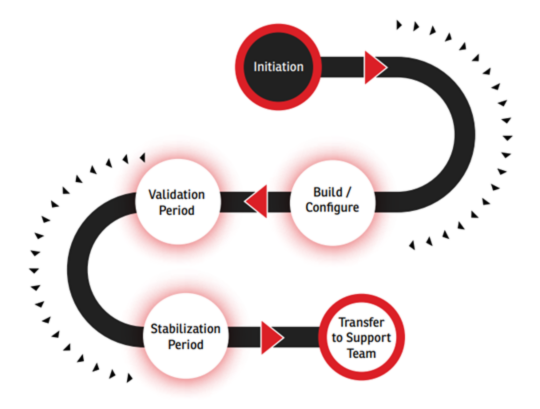
A structured implementation roadmap.
A healthcare contract management system should be implemented using a clear roadmap that includes initiation, configuration, validation, stabilization and transition to support. Clear milestones reduce disruption and speed time to value.
Healthcare expertise and ongoing support.
Healthcare contract lifecycle management requires specialized expertise. The most effective partners bring deep knowledge of healthcare regulations, contracting structures and operational realities.
Transparent pricing and long-term ROI.
Healthcare organizations should look beyond upfront costs and ask about implementation fees, reporting limitations and future expansion. Transparent pricing supports trust and long-term return on investment.
Aligning contract lifecycle management goals to organizational maturity.
Not every healthcare organization starts in the same place. Evaluating healthcare contract management software should include an honest assessment of current maturity and future goals.
Early-stage organizations often focus on centralization and visibility, replacing spreadsheets and shared drives with a single healthcare contract management system.
As organizations mature, contract management automation becomes essential. Standardized workflows, reporting and compliance monitoring allow teams to scale without increasing risk.
Advanced organizations focus on continuous improvement, regulatory optimization and integrations that support enterprise-wide collaboration across departments.
What to look for in top healthcare CLM solutions.
Technology alone does not deliver outcomes. The best healthcare contract management software is supported by a partner committed to long-term success.
Healthcare organizations evaluating top CLM solutions for hospitals should look for proven healthcare focus, deep compliance expertise, strong customer retention and a consistent record of successful implementations. These indicators often matter more than feature checklists.
Making a confident decision.
Evaluating healthcare contract management software is not about choosing the most features or the lowest price. It is about selecting a healthcare contract lifecycle management solution designed for complexity, backed by expertise and built to grow with your organization.
When healthcare organizations invest in the right contract management software for healthcare, they gain more than efficiency. They gain visibility, control and confidence in every contract decision they make.